Golden brown outside, soft and slightly sweet inside, challah is always a treat! And there’s nothing like baking a fresh loaf of warm challah at home.

In this recipe for challah bread, I’ll show you step-by-step how to create a beautiful loaf that you’ll be proud of.
WHAT IS CHALLAH?
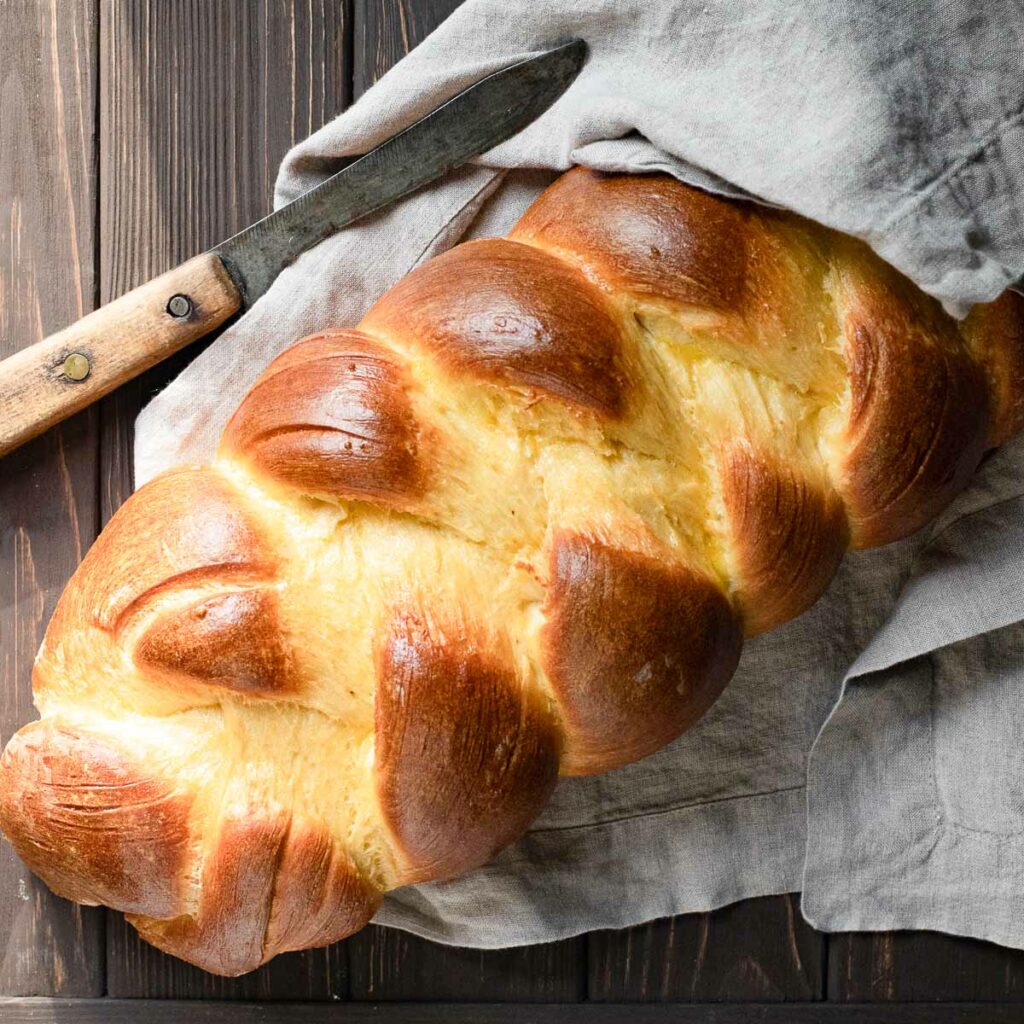
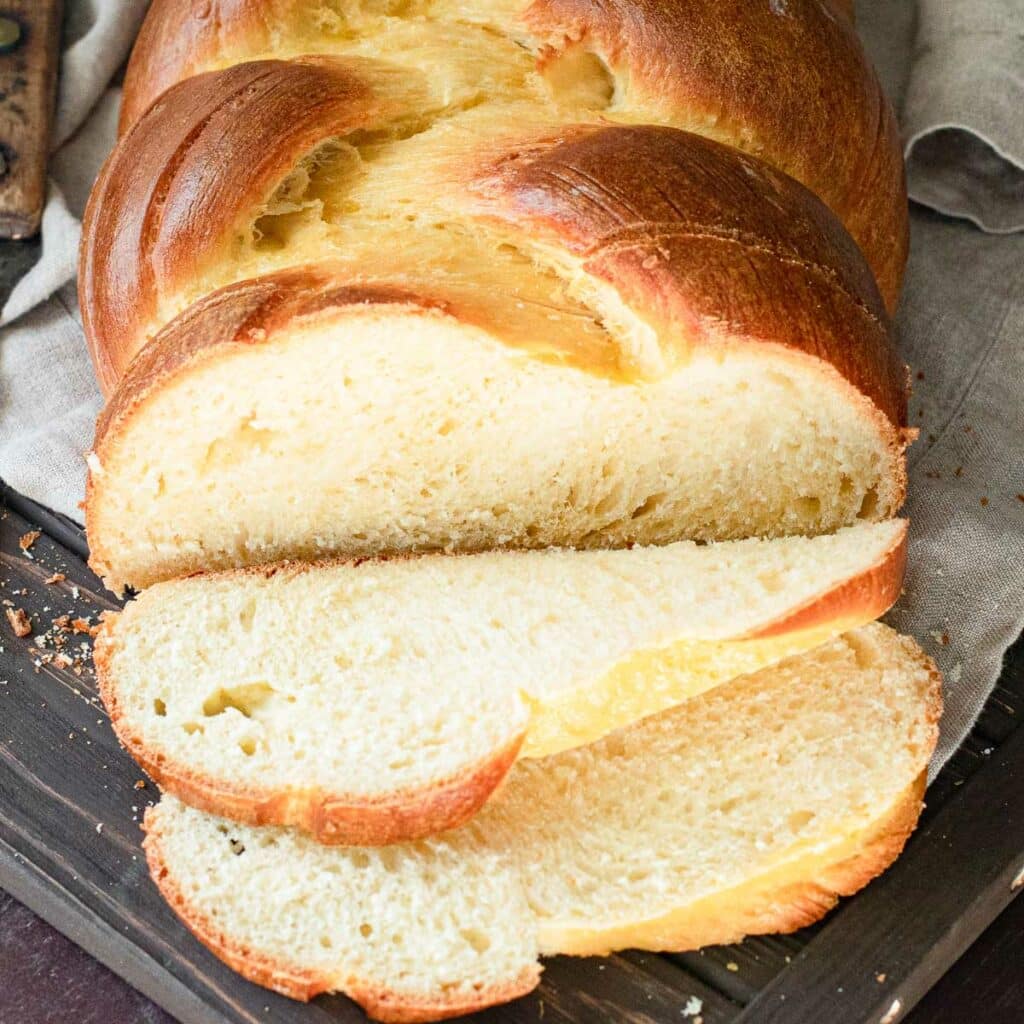
Challah is an eggy loaf of bread that has a slight sweetness to it. Soft and fluffy on the inside, it’s closest in flavor and texture to brioche bread. The dough is typically braided and, sometimes, formed into a round shape after braiding (especially around Rosh Hashanah).
Not just for major Jewish holidays, challah is enjoyed year round. For many Jews, even as frequently as weekly at Shabbat dinner.

Ingredients
- All-purpose flour
- Vegetable oil
- Eggs
- Active dry yeast
- Kosher salt
- Sugar

How to Make Challah
Make the dough
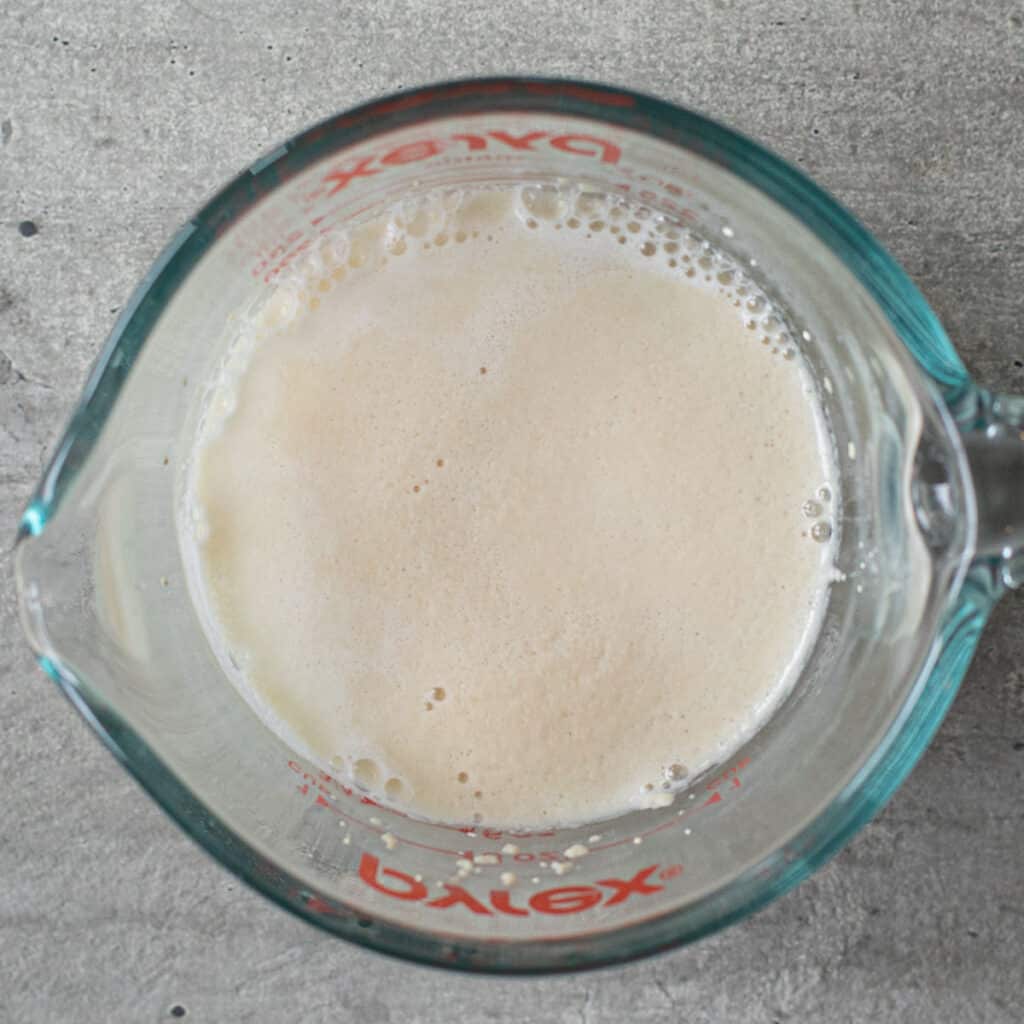
First, dissolve the yeast in warm water. The water should be almost hot, about 110-115F degrees. The water needs to be warm enough to activate the yeast, or your bread won’t rise. If you have a kitchen thermometer, now is the time to use it.
When yeast is activated, it should bubble on the surface of the water.
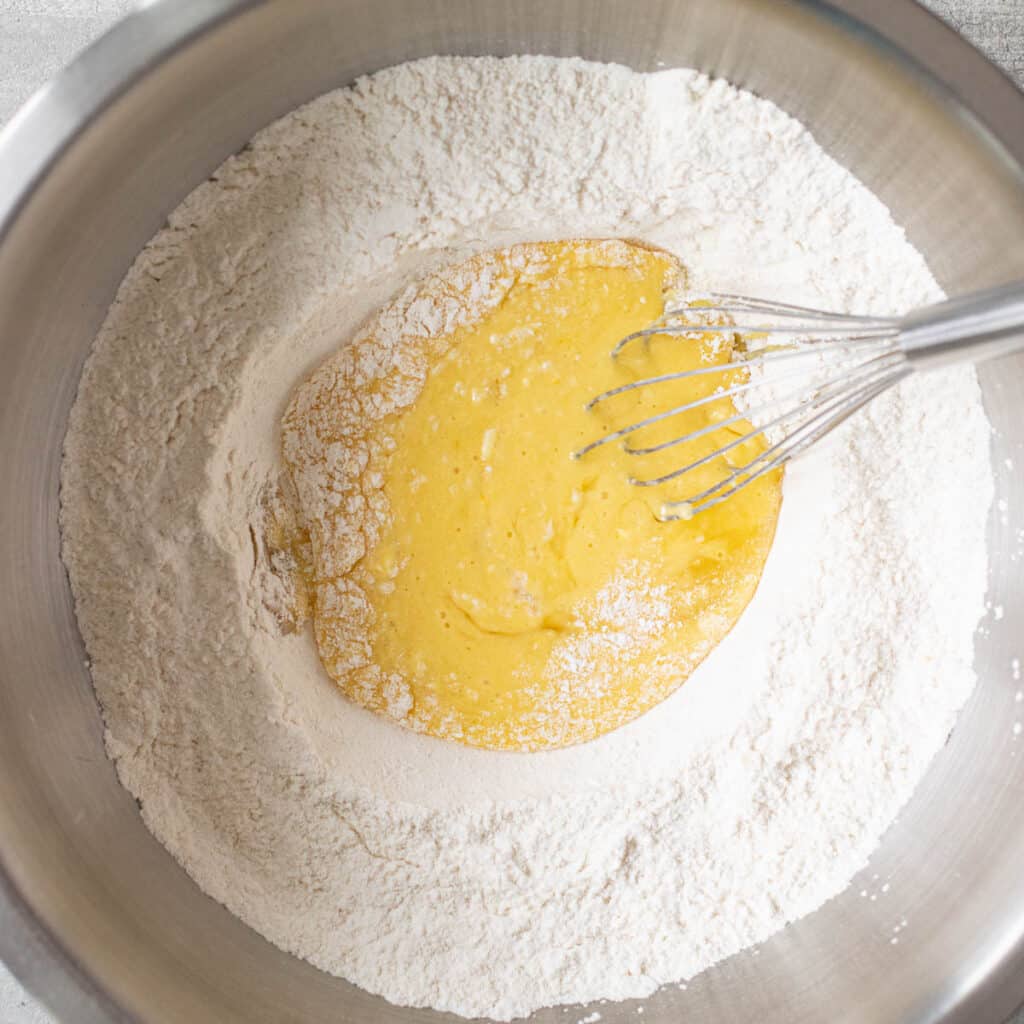
Whisk the eggs into the dry ingredients in a large bowl to form the dough. Then, add your activated yeast mixture.
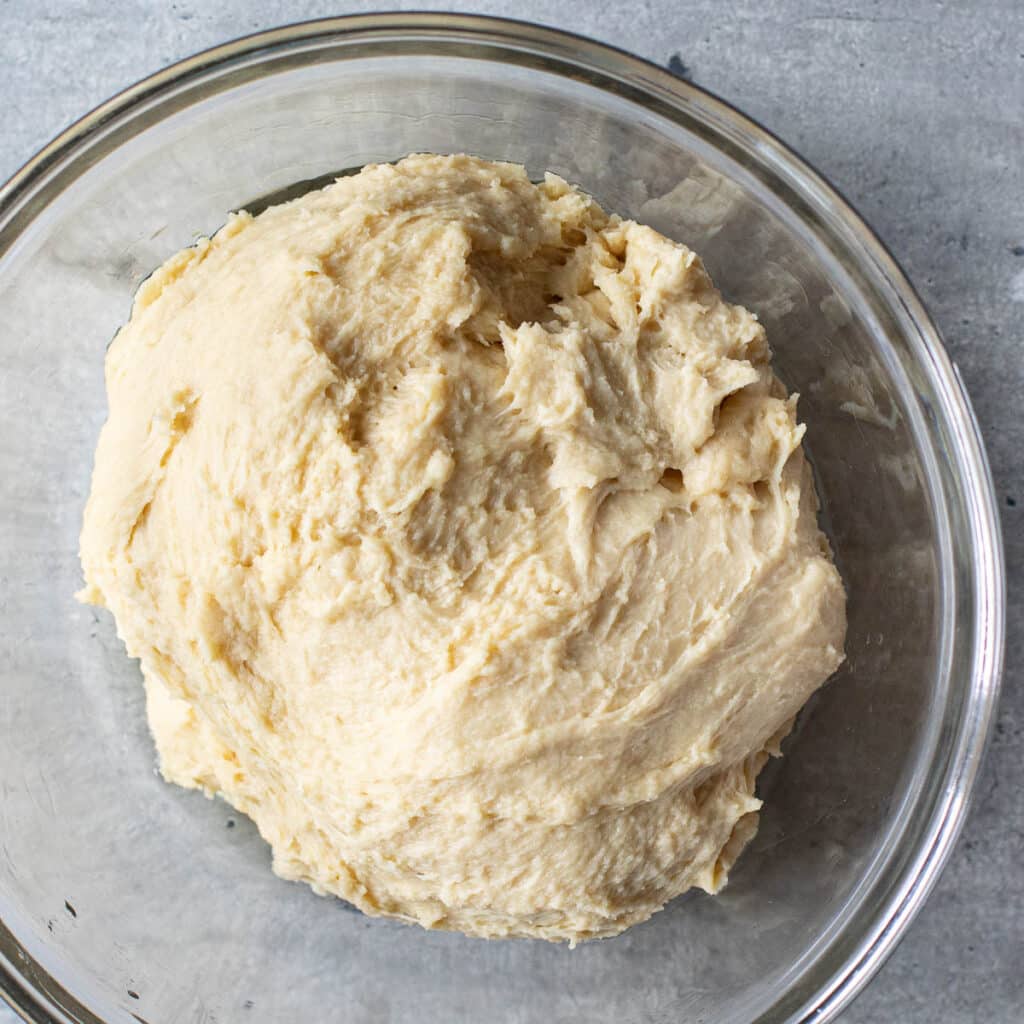
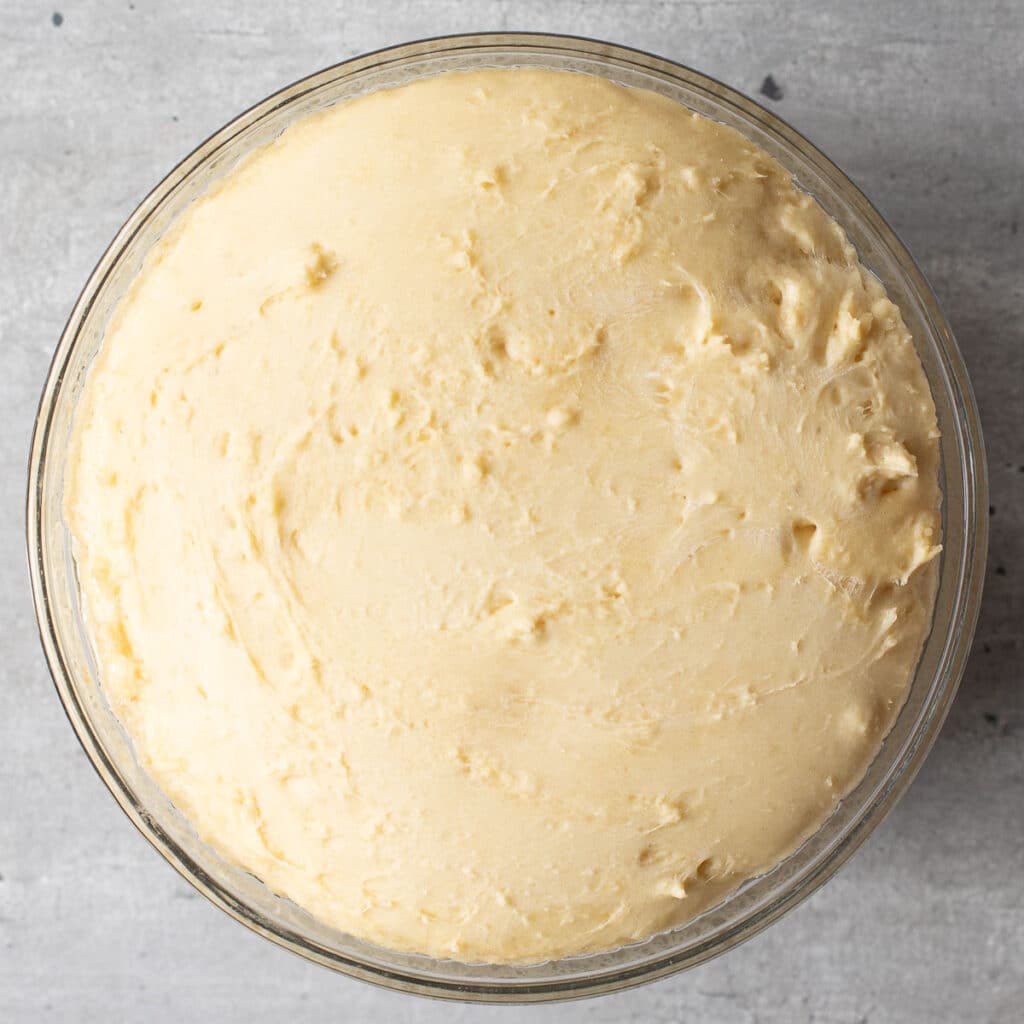
The dough will be very shaggy and dry, but don’t worry! Once you knead it, it will be super smooth and supple.
If you have a stand mixer with a dough hook attachment, you may want to use it. You’ll want to knead the dough for 8-10 minutes which, for many of us, is just too long to do by hand.
I actually love kneading by hand. I find it so therapeutic.
Do the first rise
There will be a first rise before braiding and a second rise after braiding.
Placing the dough into a warm oven is the best option for the first rise. If you put the dough into a warm oven, it will rise much faster than if you left it on the countertop.
Braid the challah
After the first rise, it’s time to braid. Don’t be intimidated! If you can braid hair, you can braid challah.
Divide the dough into three equal parts and roll each part into a long rope. Line them up next to each other and gather them together at the top.
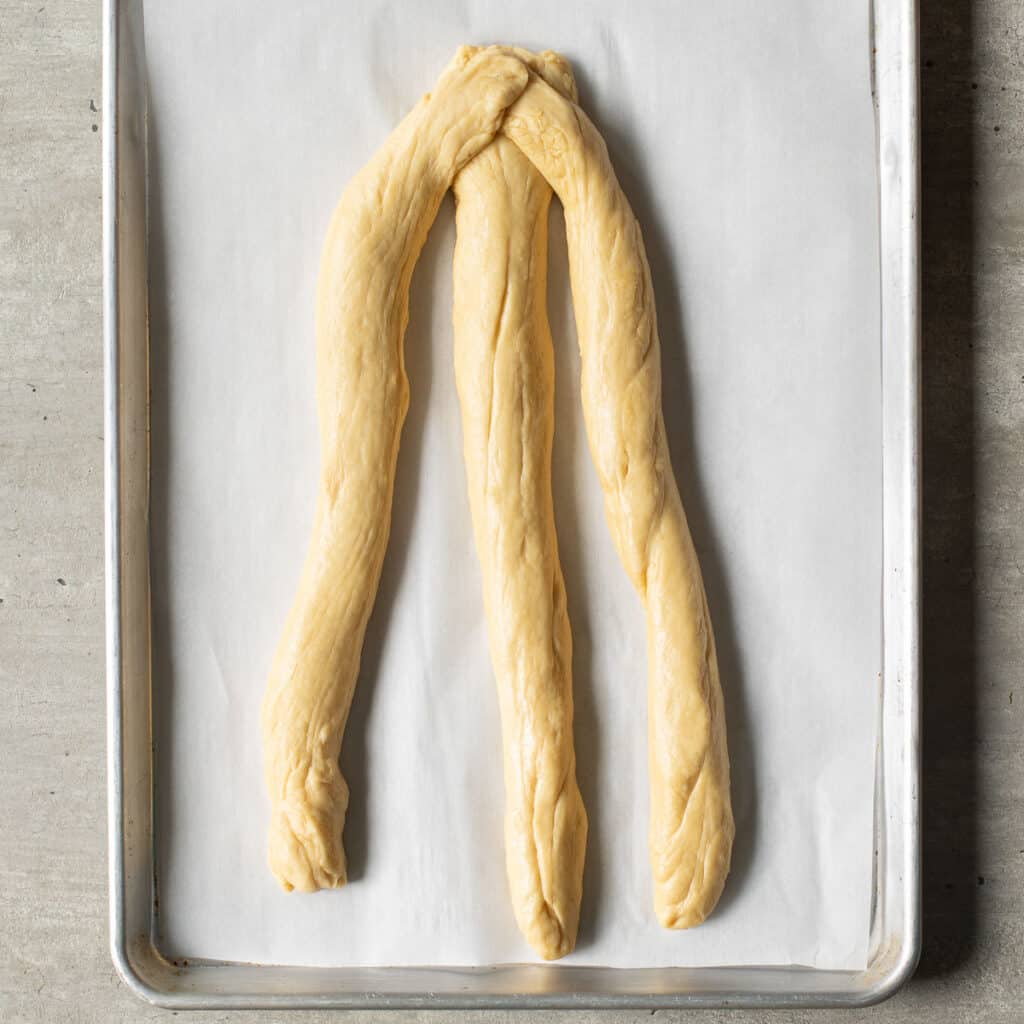
Now, cross the center rope (which should be tucked under the right side rope) over the rope to the right.
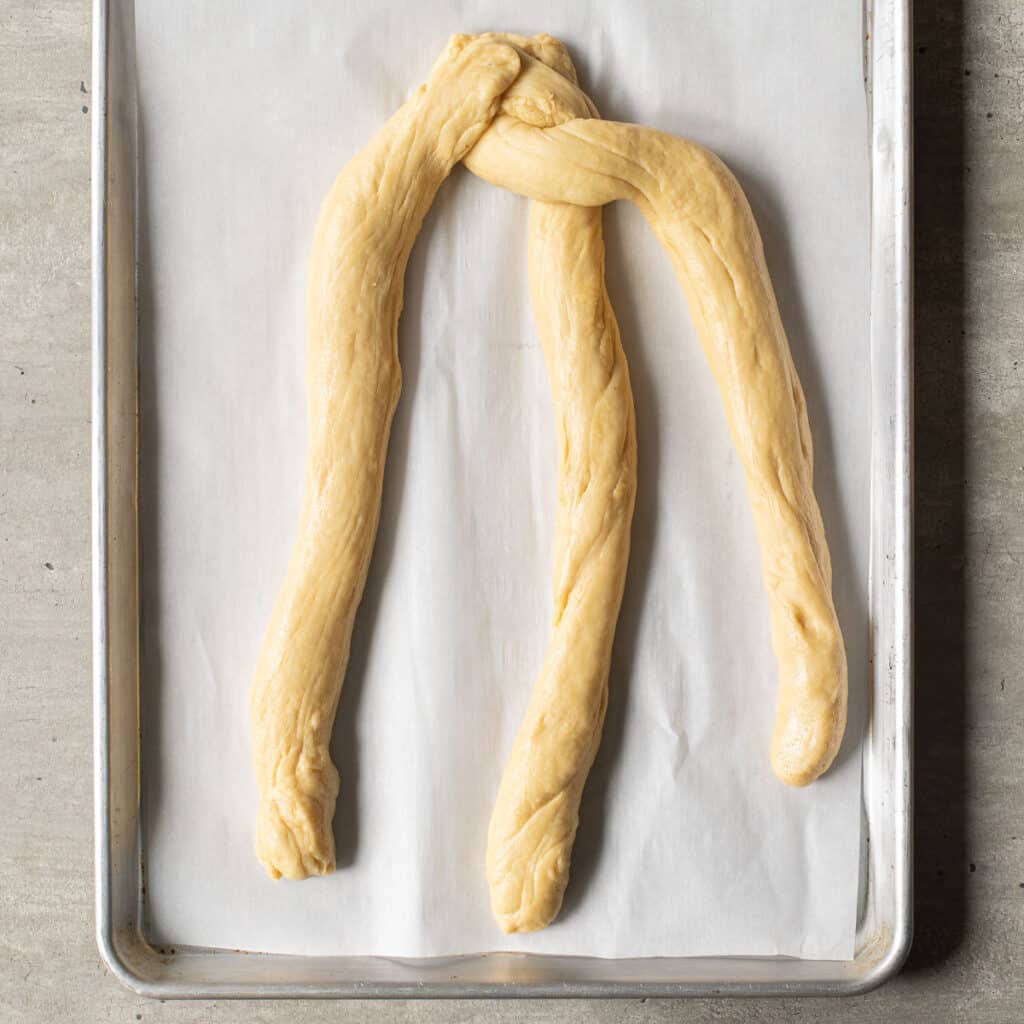
Then, take the center rope and cross it over the rope to the left.
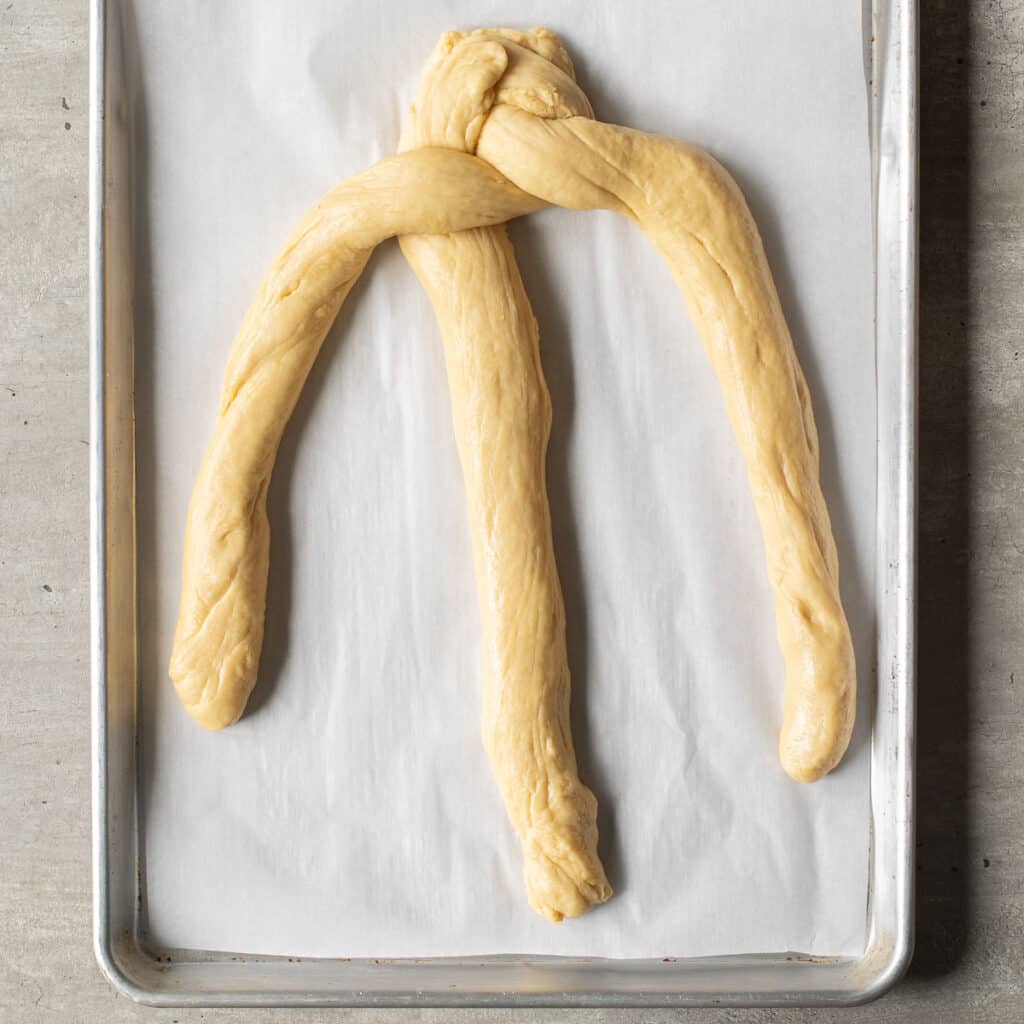
Take the center rope and cross it over the rope to the right.
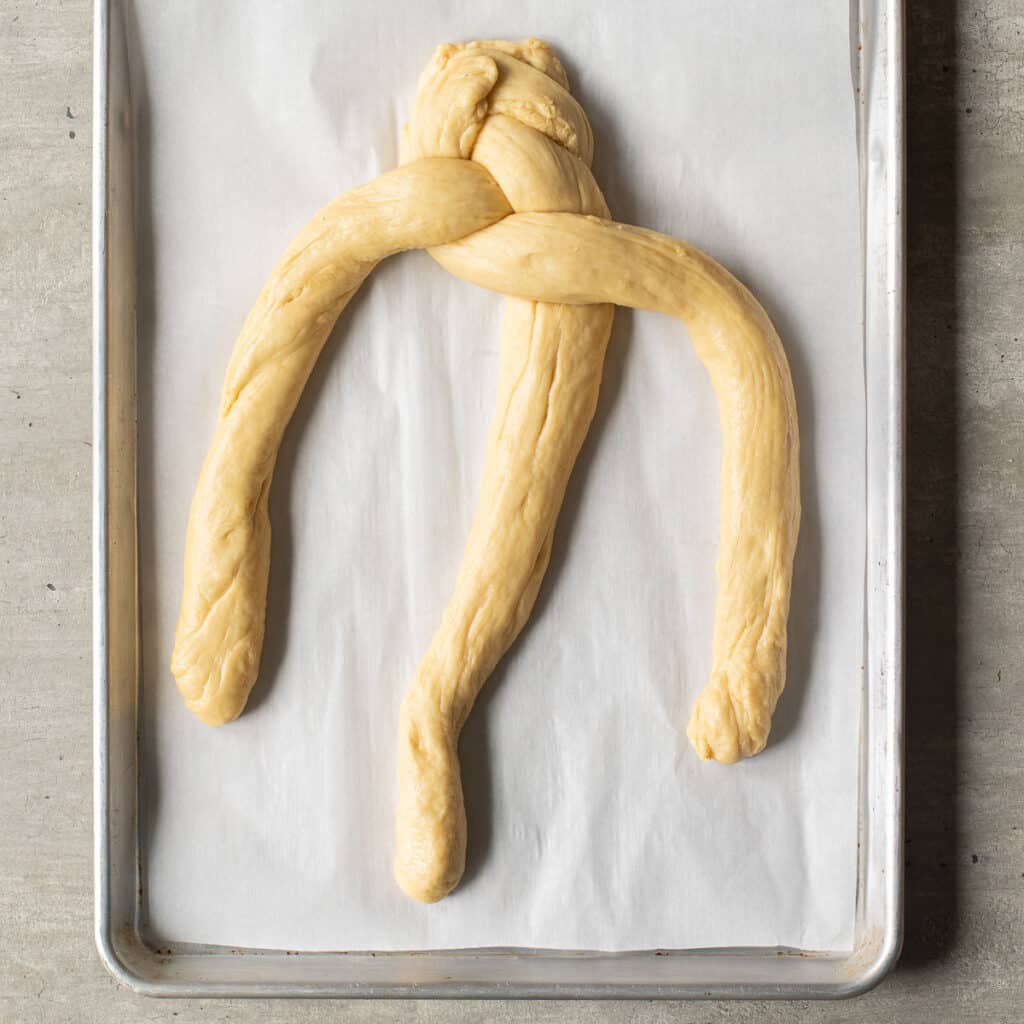
And again, take the center rope and cross it over the rope to the left.
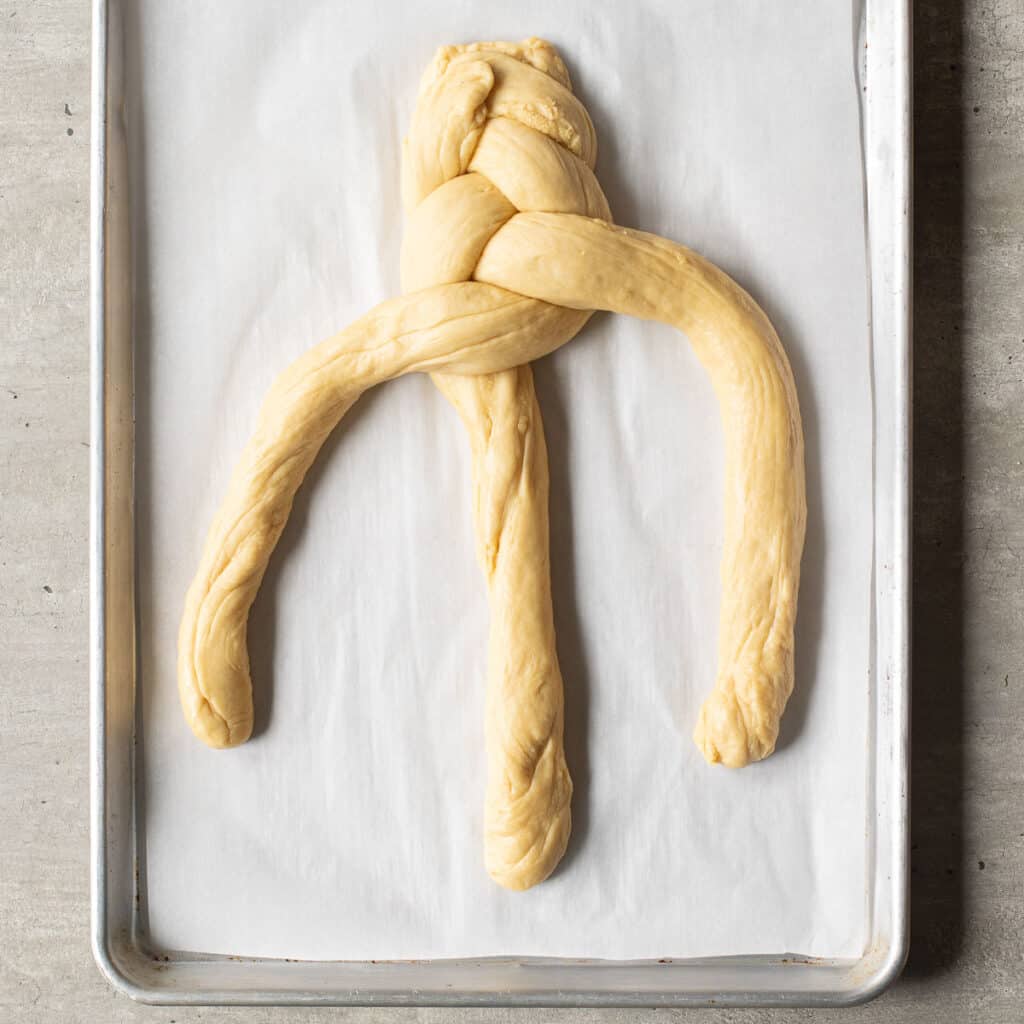
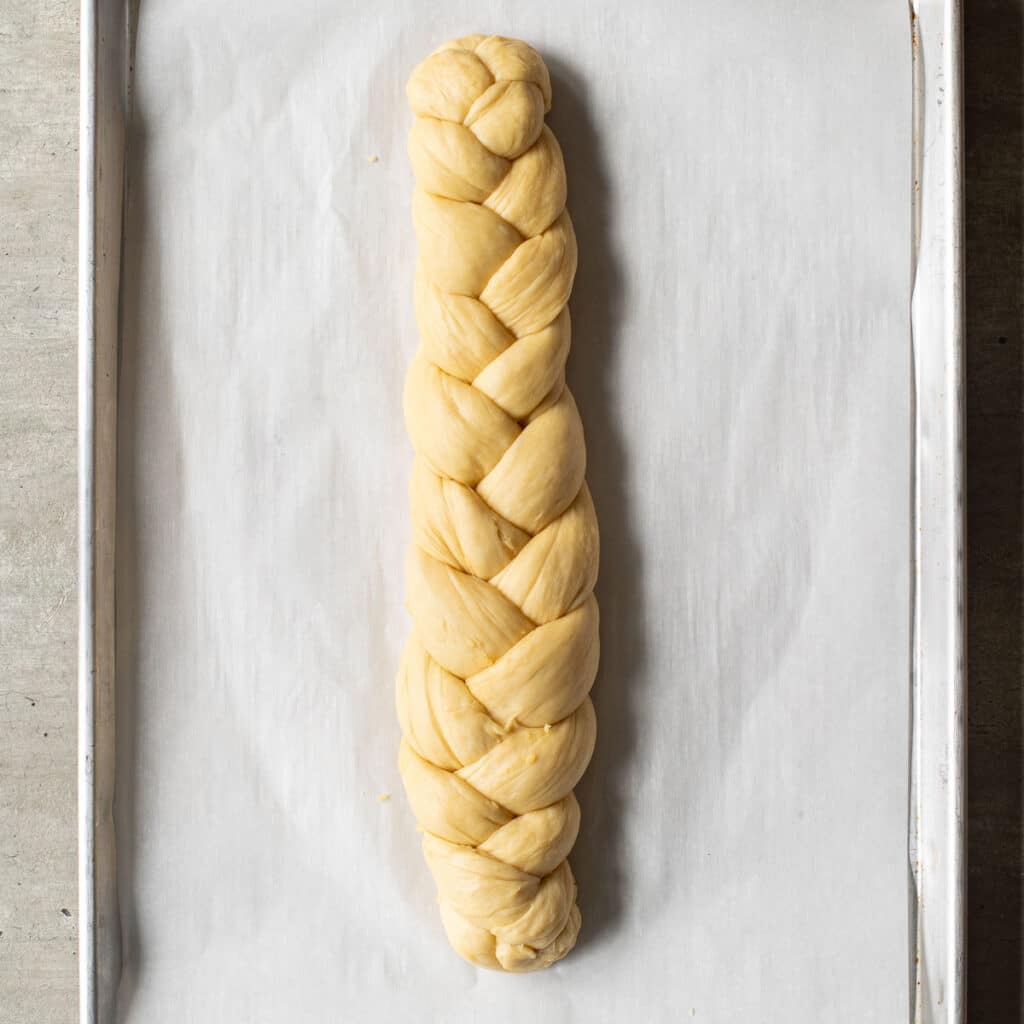
Continue to repeat, crossing the center over right, then center over left, until your dough is completely braided. Tuck the ends under.
Do the second rise
The rising time for the second rise is only 1 hour, and can be done on the counter top instead of in the oven. Just cover the braided dough with a dish towel so it won’t dry out, and let it sit. Then, you’re ready to bake!
Prepare the challah for baking
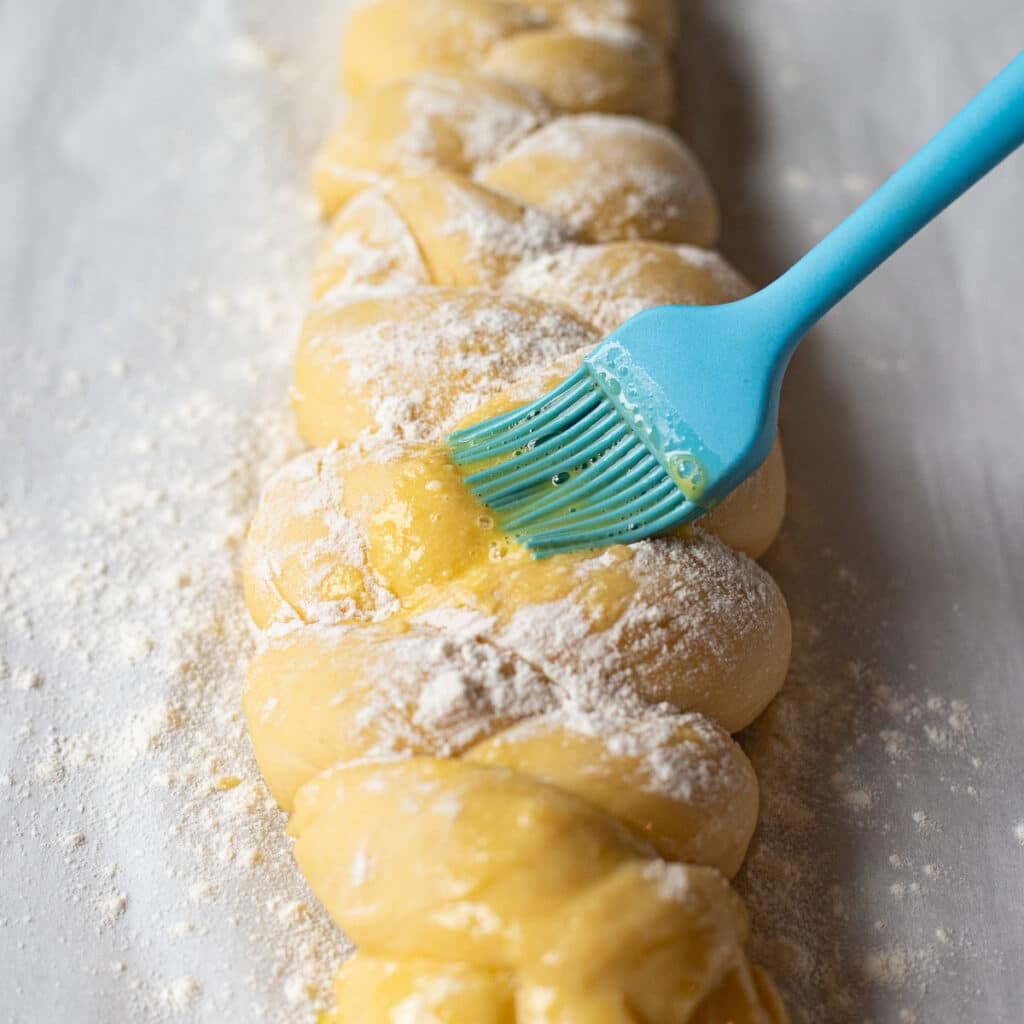
Before you bake your challah, give it a good slather of egg wash. Be sure to get the egg wash in all the crevices.
The dough will want to pull apart during baking, so be sure there is beaten egg everywhere.
Watch how to braid challah!
Ways to Enjoy Challah
- French Toast: Challah is dense and absorbent, making it a perfect choice for the best French toast.
- Sandwiches: From classic deli-style sandwiches to grilled creations, challah’s sturdy texture holds up well against whatever you’re piling on.
- Bread Pudding: Challah’s ability to retain moisture makes it an ideal base for bread pudding, absorbing custard to create a silky texture.
Variations
- Raisin Challah: You’ll see this version a lot. Using plump raisins or even golden raisins adds a burst of flavor to the bread, making it a favorite for special occasions.
- Classic Challah: Sprinkle the top of your unbaked challah with sesame seeds or poppy seeds for an old-school twist that your grandparents would love.
- Whole Wheat Challah: If you’re seeking a heartier option, whole wheat flour can be substituted for part or all of the white flour, offering a nuttier flavor and a denser texture.
- Savory Herb Challah: By incorporating herbs like rosemary, thyme, or even garlic into the dough, you can create a savory twist that pairs well with various dishes.
- Chocolate Chip Challah: Not just for kids, chocolate chips lend a touch of indulgence to the bread, making it the perfect base for desserts.
Make Ahead Instructions
Challah is a great bread to make ahead, especially when you’re preparing for a holiday, dinner party or special meal. Here are some make-ahead options:
1. Prepare the dough, allow it to complete its first rise, then shape and braid the loaf. Instead of baking it immediately, cover the shaped challah tightly and place it in the refrigerator for an overnight rise.
The next day, allow the dough to come closer to room temperature and finish rising before brushing it with egg wash and baking.
2. Freeze baked challah. Once the bread has cooled completely, wrap it tightly in plastic wrap and place it in a freezer-safe bag or container. Freeze for up to a few months for the best quality.
To serve, thaw the challah at room temperature. For that freshly baked texture, you can warm it briefly in the oven before serving.
If you’re making challah for a special occasion, making it 1-2 days before can actually make the process much easier. You’ll have the bread ready to go while leaving yourself plenty of time to focus on the rest of the meal.
Storage Instructions
The best way to freeze challah is to first wrap it tightly in plastic wrap. Then, place it into either an airtight container or a large freezer bag for double protection against freezer burn.
Try to squeeze as much air as possible out of the freezer bag. If you have a vacuum sealer, this is a great time to use it.
When you’re ready to enjoy your challah again, let it come to room temperature in a warm place and dig in!
What are Common Challah Baking Mistakes?
- Using Water that is too Hot. Water that is too hot can kill the yeast, which means your dough may not rise properly. I strongly recommend using a kitchen thermometer to ensure that the water is between 110F-115F degrees.
- Adding Too Much Flour. This is one of the most common bread-making mistakes. Adding too much flour can result in a dense, dry loaf instead of soft, fluffy challah. The dough should be soft and slightly tacky. If it sticks excessively to your hands or work surface, add flour gradually rather than adding a large amount all at once.
- Not Kneading the Dough Enough. Kneading develops the gluten that gives the bread structure. If the dough isn’t kneaded sufficiently, the finished challah may not have the airy, stretchy texture you’re looking for.
- Not Giving the Dough Enough Time to Rise. Don’t rush the rising process. If the dough hasn’t doubled in size, give it more time. A cool kitchen can significantly slow down the yeast.
- Skipping the Egg Wash. The egg wash is what gives challah that gorgeous shiny, golden-brown crust. For the prettiest loaf, brush the entire surface of the dough before it goes into the oven.
- Overbaking the Bread. Challah should be deeply golden on the outside but soft and tender inside. Overbaking can leave you with a dry loaf, so keep a close eye on it toward the end of the baking time.
FAQs
Challah does not have to be braided, but it is traditional to do so. The braiding of the bread has various symbolic meanings to Jews, and a braided loaf is also very pretty.
If you choose not to braid challah dough, you can form it into rolls or buns or simply bake it in a loaf pan.
The secret to good challah is properly developed dough and enough time to rise. It can be tempting to rush the process, especially when you’re waiting for the dough to double in size, but patience makes a big difference.
Don’t rely only on the clock. Look at the dough. If it has doubled in size and looks puffy, it’s ready for the next step.
Another secret is the egg wash. Brushing the shaped loaf generously with beaten egg before baking gives challah its signature glossy, deep golden-brown crust. The dough will expand as it bakes, so be sure to get the egg wash into all of the crevices.
Although challah and brioche have several similarities, there are also differences.
Both are enriched breads, meaning they contain ingredients like eggs and fat that give them a soft, tender texture. However, traditional challah is made without dairy and is typically made with oil rather than butter.
Brioche is generally richer and more buttery, while challah has a slightly lighter texture and a subtly sweet flavor. Challah is also traditionally associated with Jewish cuisine and is often braided before baking.
When you make this challah recipe, I’d love to hear about it! Drop a rating or leave a comment below. Enjoy!
For more bread recipes, try these:
- Parker House Dinner Rolls
- The Best Honey Cornbread Recipe (with gluten free option!)
- Homemade Cherry Bread Recipe
For more Jewish recipes, try these:
- Sweet Noodle Kugel Recipe (Jewish Noodle Pudding)
- Latkes Recipe (Jewish Potato Pancakes)
- Best Raspberry Rugelach Cookies
How to Make the Best Challah (Homemade Bread Recipe)
Ingredients
- 4 cups all-purpose flour
- 1 envelope active dry yeast
- 3/4 cup warm water 110-115F
- 1/3 cup sugar
- 4 eggs divided
- 1 Tbsp. kosher salt
- 1/4 cup vegetable oil
Instructions
- Dissolve the yeast in warm water for 5-10 minutes.
- Whisk together the flour, sugar and salt in a large mixing bowl. Make a well in the center and add 3 eggs and oil. Whisk the eggs, pulling a little bit of flour into the center to make a paste.
- Pour the yeast mixture into the well. Stir with a wooden spoon until combined. The bread dough will be shaggy.
- Preheat oven to 200 degrees.
- Dump the dough onto a floured surface and knead for 8-10 minutes. (Alternatively, put the dough into the bowl of a stand mixer fitted with a dough hook and knead on low speed, 8-10 minutes). The dough will be soft and smooth.
- Turn off the oven. Place dough in an oiled bowl and cover with a kitchen towel for the first rise. Place into the warm oven for 1-2 hours, until doubled in size.
- Punch the dough down and divide into 3 equal pieces. Roll each piece into a rope 16-18 inches long. Line the ropes up next to each other on a baking sheet lined with parchment paper. Pinch the ends together on one side.
- Braid the dough: Cross the center rope over the rope on the right. Then, cross the center rope over the rope on the left. Continue crossing center over right, center over left, until the dough is braided. Tuck the ends under.
- Dust with flour, cover with a kitchen towel and let rise for 1 hour.
- Preheat oven to 350 degrees. Beat the remaining egg with 1 Tbsp. of water in a small bowl. Brush the entire loaf with the egg wash.
- Bake 15 minutes. Rotate the baking sheet and bake another 20 minutes. Allow challah to cool to room temperature on the sheet pan before slicing.
Good recipe love the Jewish traditions. Feast days are wonderful to learn .and the ways of the Torah is all inspiring.
The second time the bread rises (when it’s covered with a towel), do you place it in the oven or just the counter top? I’m very new to baking yeast bread.
Hi Jennifer!
The second rise is just on the counter top. We just use a warm oven for the first rise to speed up the process. Let me know if you have any other questions!
You left out baking powder.
Hi Faith,
This recipe doesn’t require baking powder 🙂
Lovely recipe and write up. Please note that Jews say Challah. Not Challah ‘Bread’. E.G. Every Shabbat we have Challah.
Hi Nik,
I understand, I am Jewish! The term “challah bread” makes it easier for people to find the recipe in Google. I hope you enjoy the recipe!
Thank you for posting Challah bread recipe, looking forward to making it ?
Hi Carolyn,
I hope you love the challah! Let me know how it goes! 🙂
Am I missing it, or have you omitted any braiding instructions? That would help a bald braider.
Hi Doug,
Bald braider made me LOL 🙂
I will add some process shots so you can see, but for now, here’s what to do:
Line up the 3 ropes of dough parallel to each other and gather the tops together, as per the photos on the post. Cross the right rope over the center rope, so that it becomes the center rope. Then, cross the left rope over the center rope, so that the left is now the center. Continue to cross right over center, left over center, until the braid is complete. Gather the ends together and tuck them under.
Hope this helps 🙂
Any advice for doing this with all-purpose Gluten Free flour?
Hi Rachel, I have not tested this recipe with gluten free flour, but I’m dying to! I’d recommend using Cup4Cup Multipurpose Flour. I’ve had the best results with this brand for baking. Let me know! 🙂