
This homemade stuffing is the ultimate classic holiday side dish!
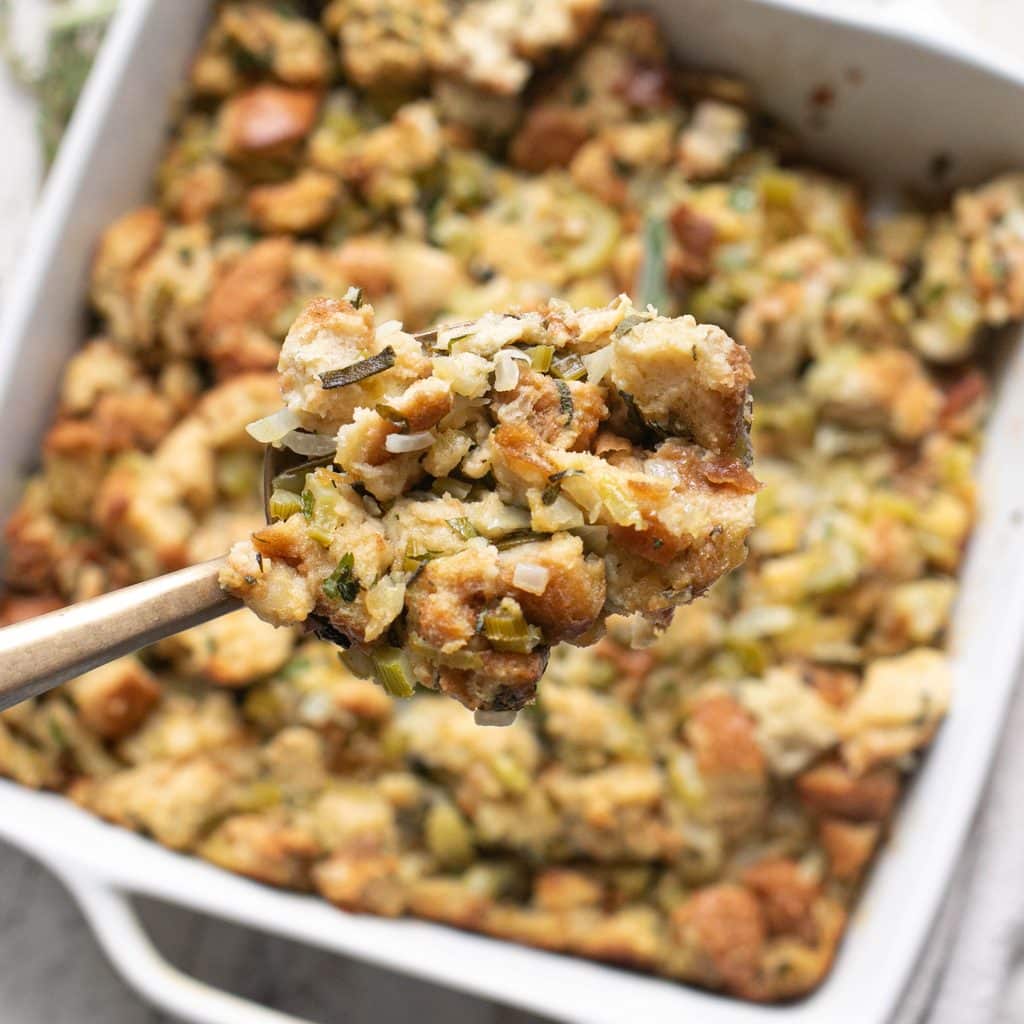
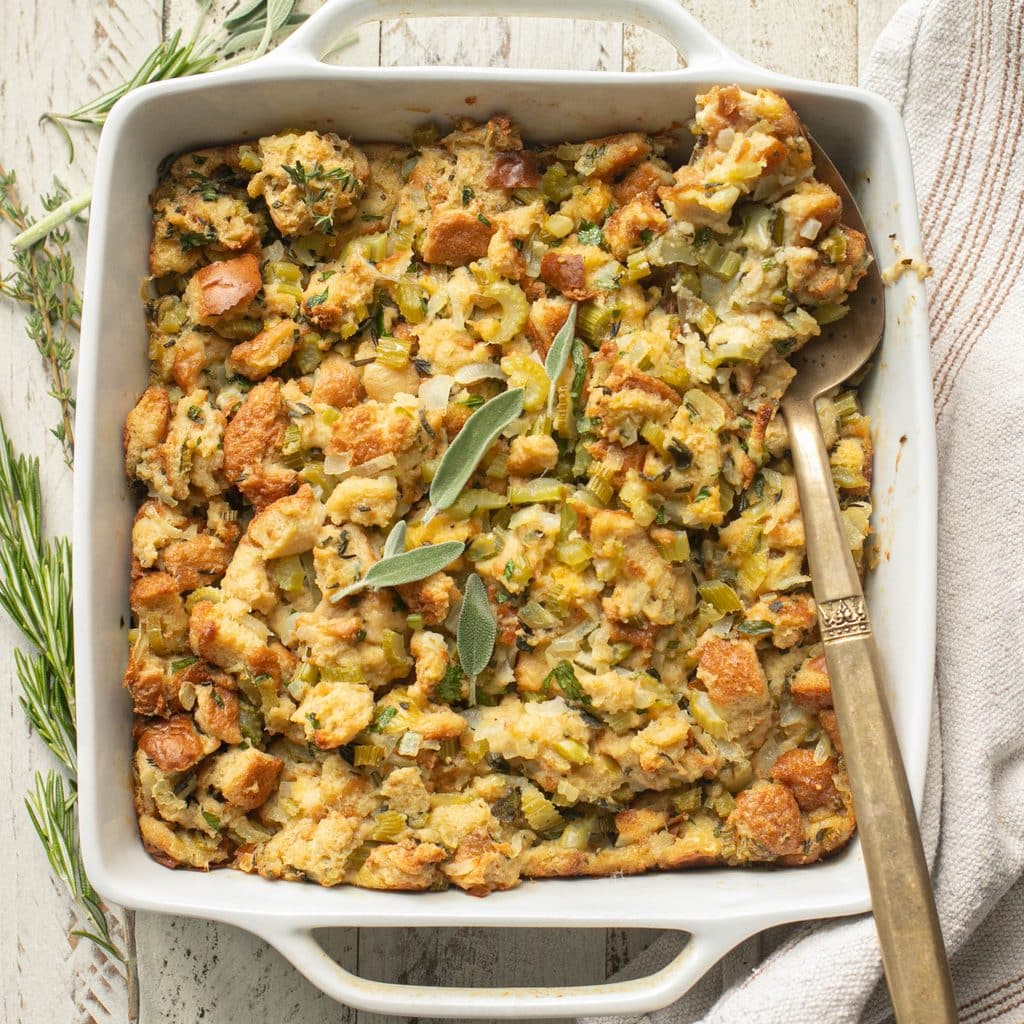
Made with buttery bread cubes, sautéed onions and celery, chicken stock and fragrant herbs, this traditional stuffing recipe is full of comforting flavors and a deliciously crisp, golden-brown top. It’s an easy stuffing recipe that uses simple ingredients to create the kind of homemade stuffing that tastes like Grandma’s.
Whether you serve it alongside your Thanksgiving turkey, roast chicken, or as part of a cozy Sunday dinner, this classic herb stuffing recipe deserves a place on your table.
You can even prepare it ahead of time to save precious oven space on Thanksgiving Day.
Why We Love This Recipe
- Simple ingredients: You only need bread, butter, onion, celery, broth and seasonings to make this delicious stuffing recipe from scratch.
- Classic holiday flavor: Fresh herbs, white bread cubes and plenty of butter give this traditional stuffing recipe its familiar, comforting taste.
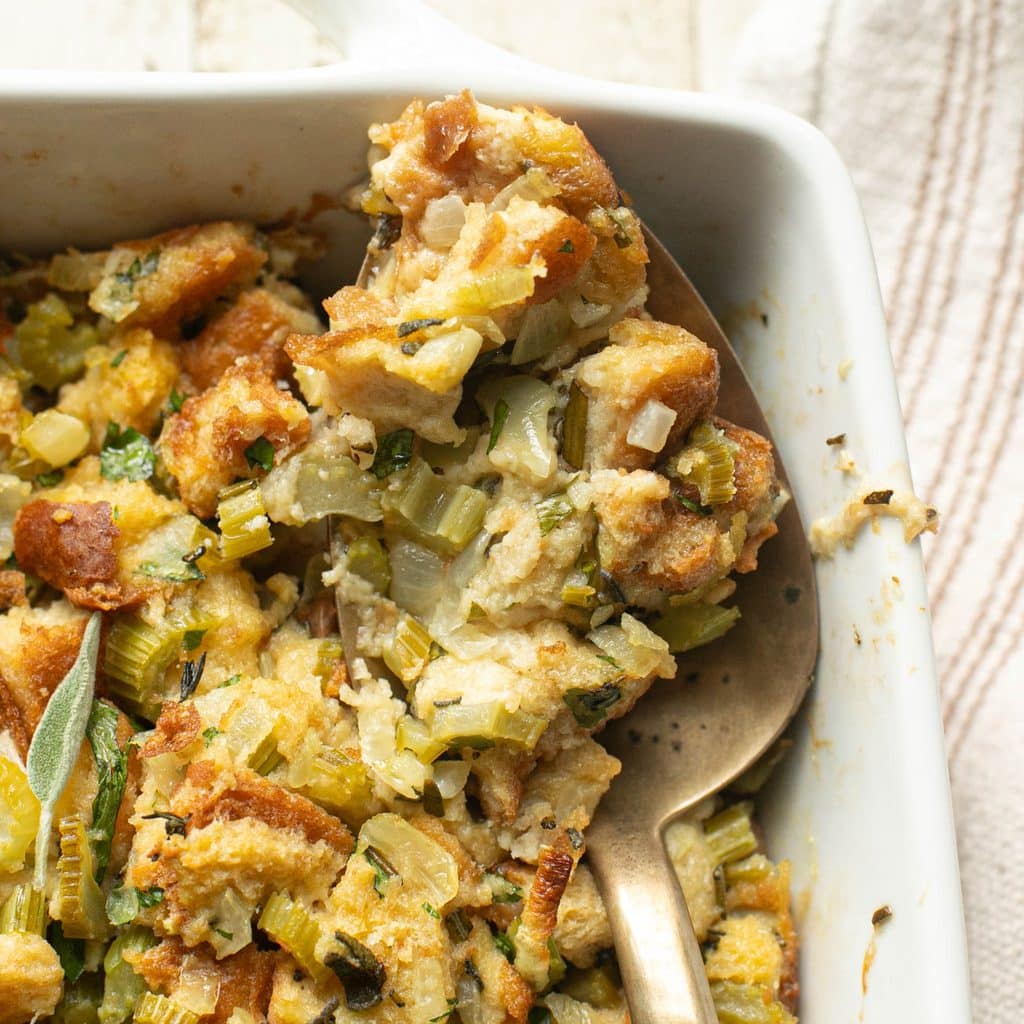
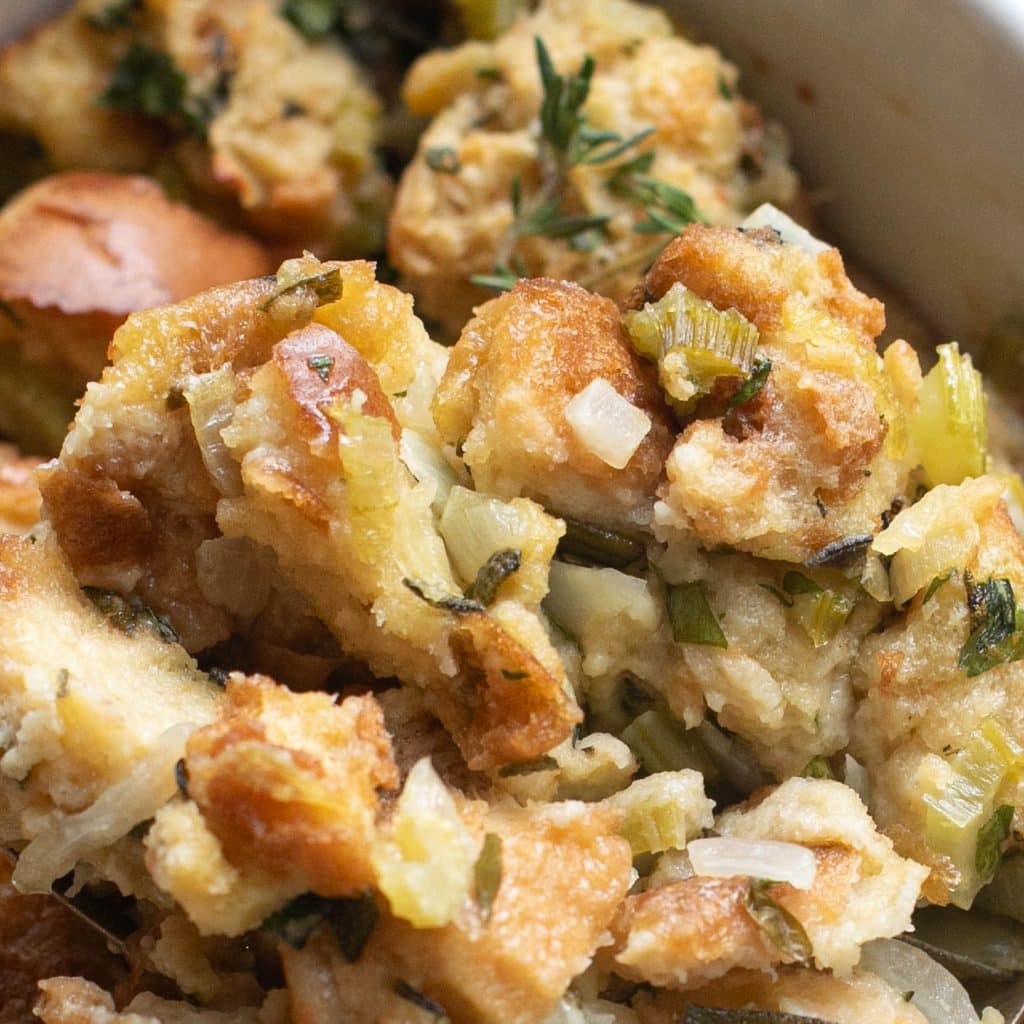
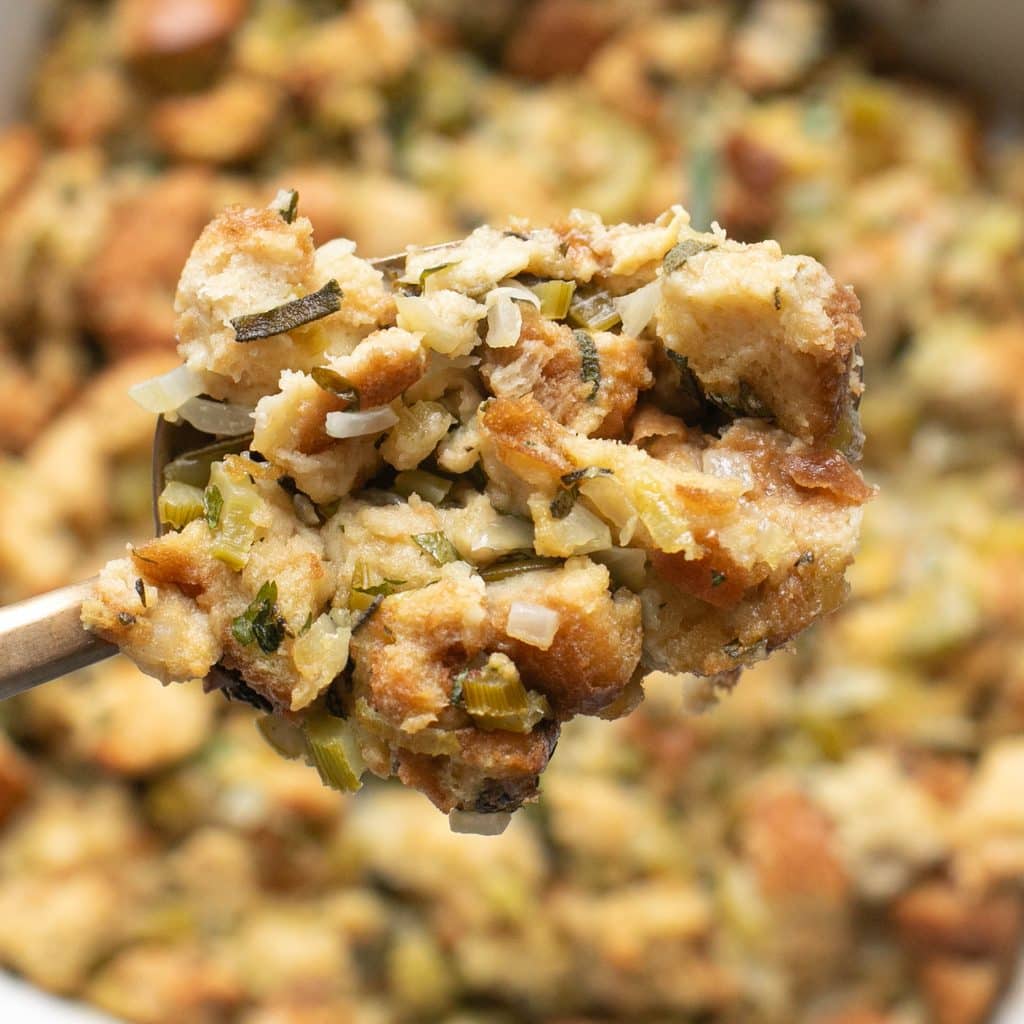
- Crispy on top, tender inside: The bread mixture bakes up golden brown around the edges while staying moist and flavorful in the center.
- Easy to customize: Add sausage, apples, dried cranberries or other ingredients to create different stuffings for your Thanksgiving table.
- Make-ahead friendly: Prepare the stuffing in advance so you can spend less time in the kitchen and more time with family.
- Better than boxed stuffing: Unlike a packaged stuffing mix, homemade stuffing lets you control the ingredients, texture and seasonings for the best flavor.
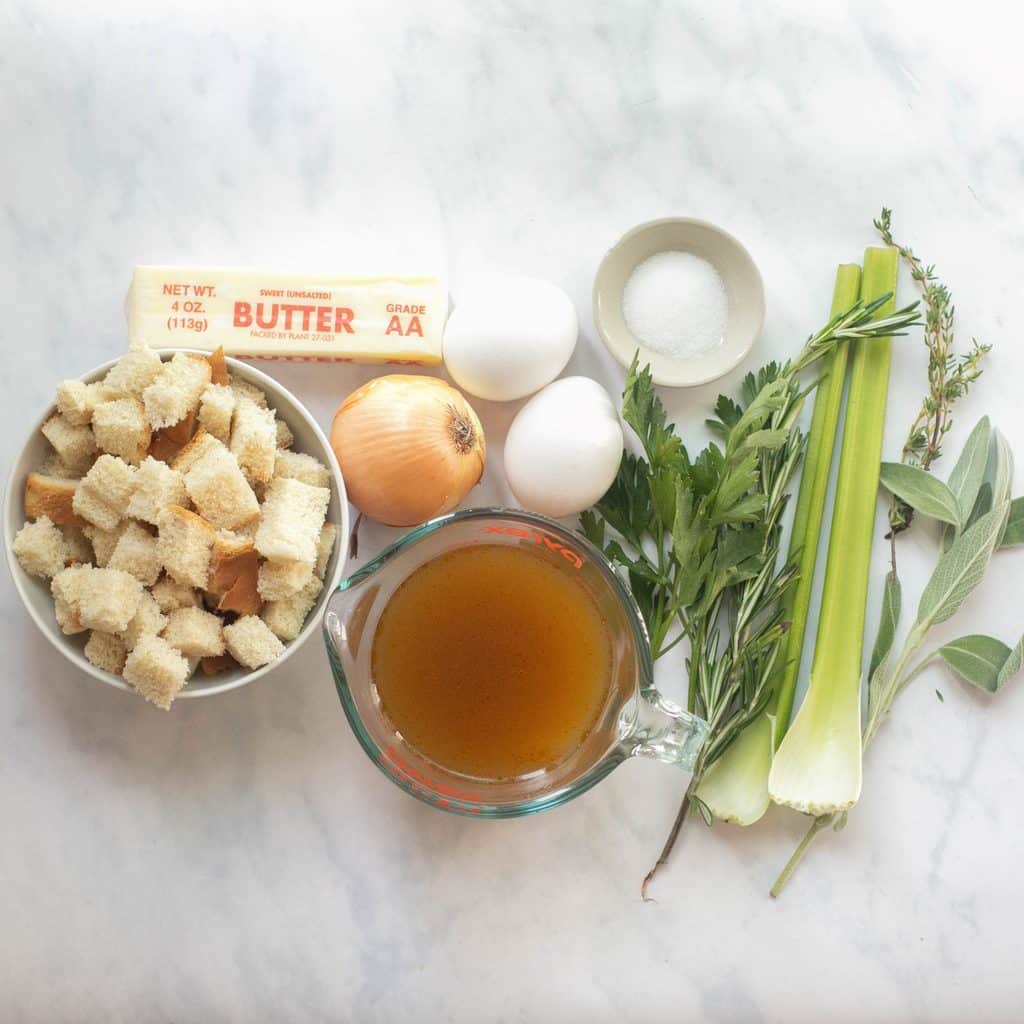
Ingredients
- Dried bread cubes. You can use day-old bread, stale bread, or fresh bread that you’ve dried yourself. French bread, artisan bread, sourdough bread, white bread, sandwich bread, and wheat bread are all options. For this recipe, I recommend regular white bread.
- Onions
- Celery
- Chicken stock
- Eggs
- Butter
- Fresh parsley
- Fresh sage
- Fresh rosemary
- Fresh thyme
- Salt
How to Make Homemade Stuffing
Cook the Onions and Celery
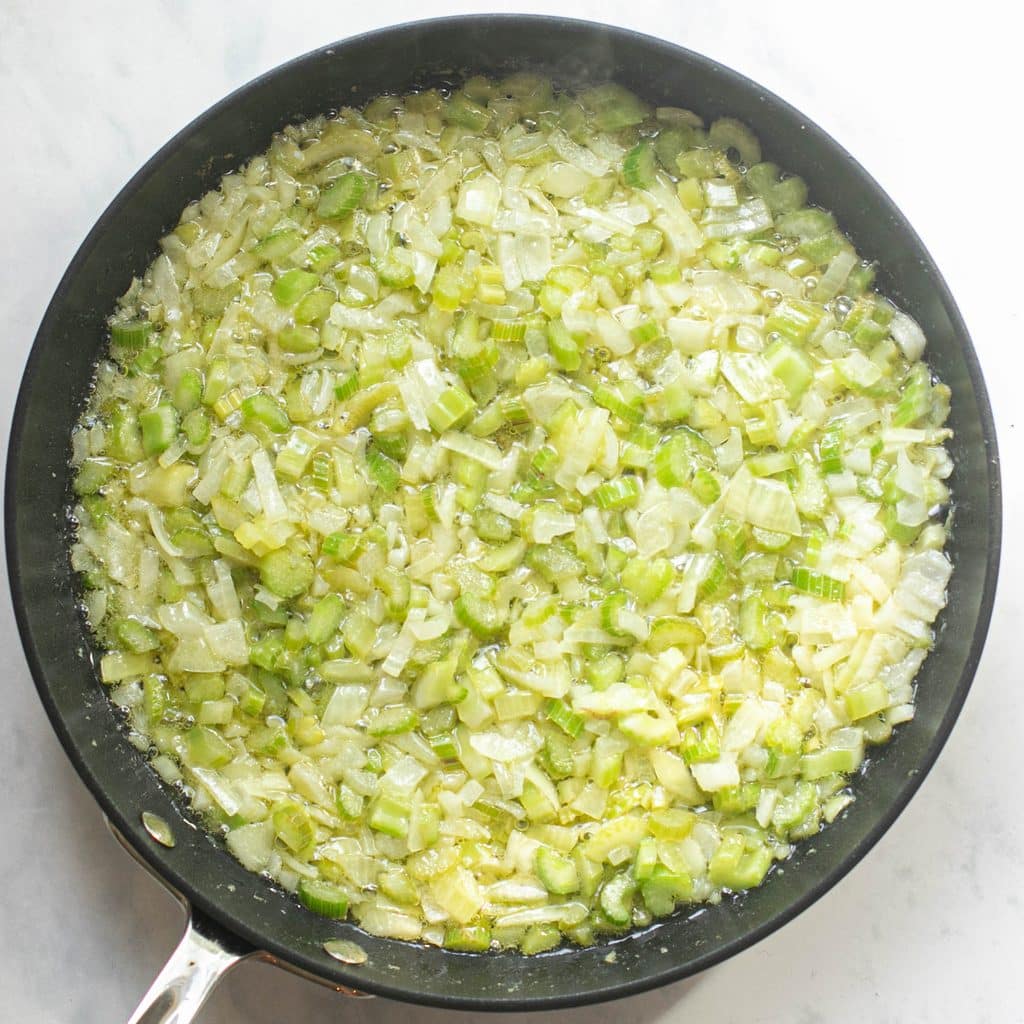
Start by sauteing the chopped onions and celery in lots of butter until they’re soft. Then, set them aside.
Make the Stuffing Mixture
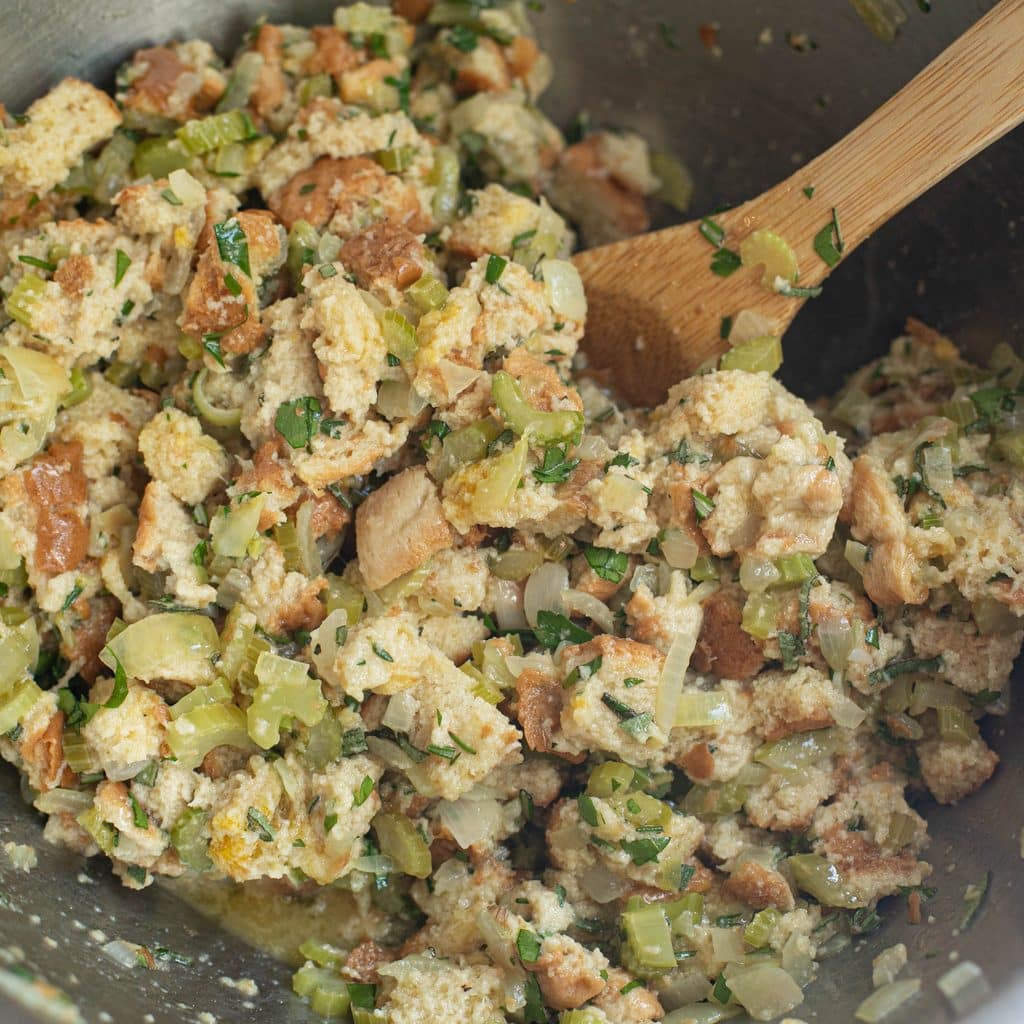
Grab a large mixing bowl and combine the dried bread cubes, eggs, chicken stock, fresh herbs and the cooked onions and celery. Mix it all together, making sure that the bread is moistened and not totally wet.
Bake the Stuffing
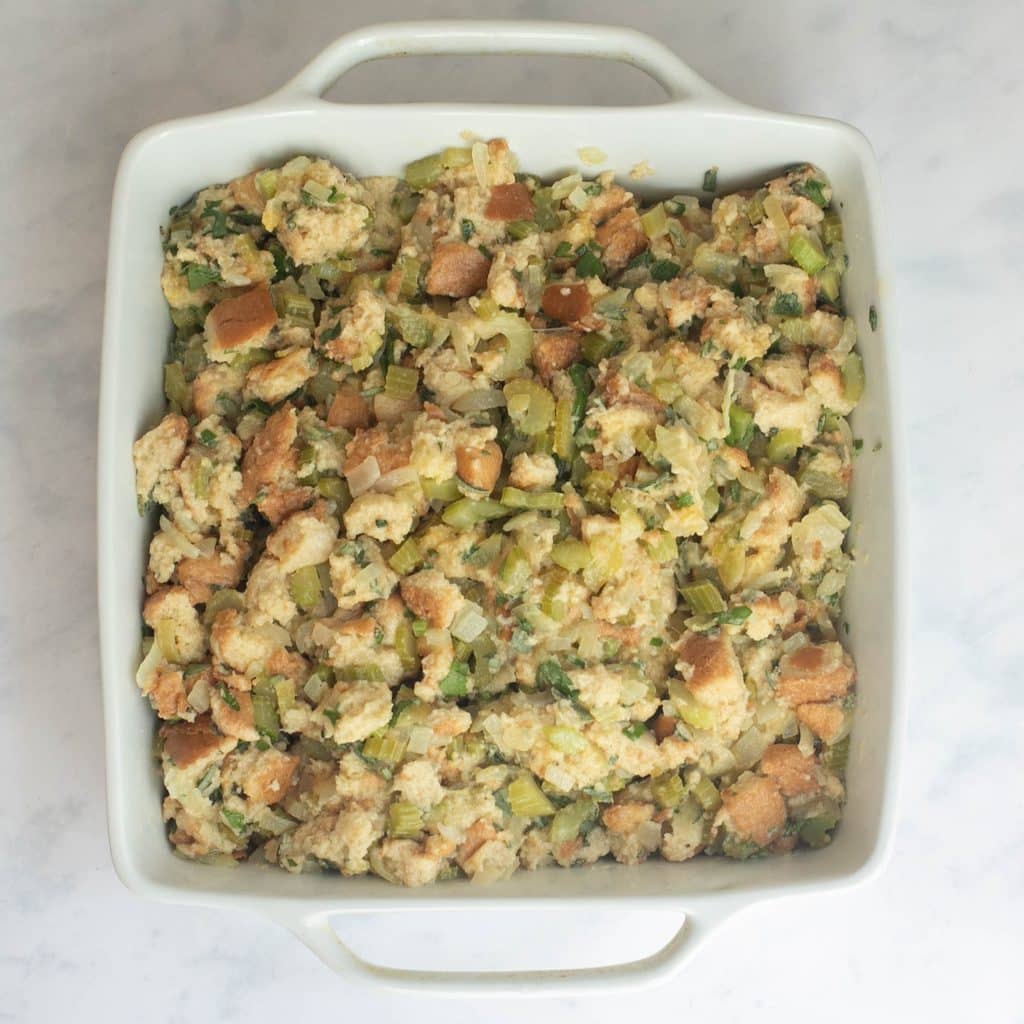
Transfer the stuffing mixture to a casserole dish and cover it with foil. Bake it with the foil on, and then remove the foil halfway through. This will give you a beautiful golden crust on top.
How to Dry Bread for Stuffing
Dry bread is one of the most important secrets to making the best Thanksgiving stuffing. Fresh bread contains more moisture, which can cause the finished dish to become mushy when you add broth.
There are two easy ways to dry bread for stuffing:
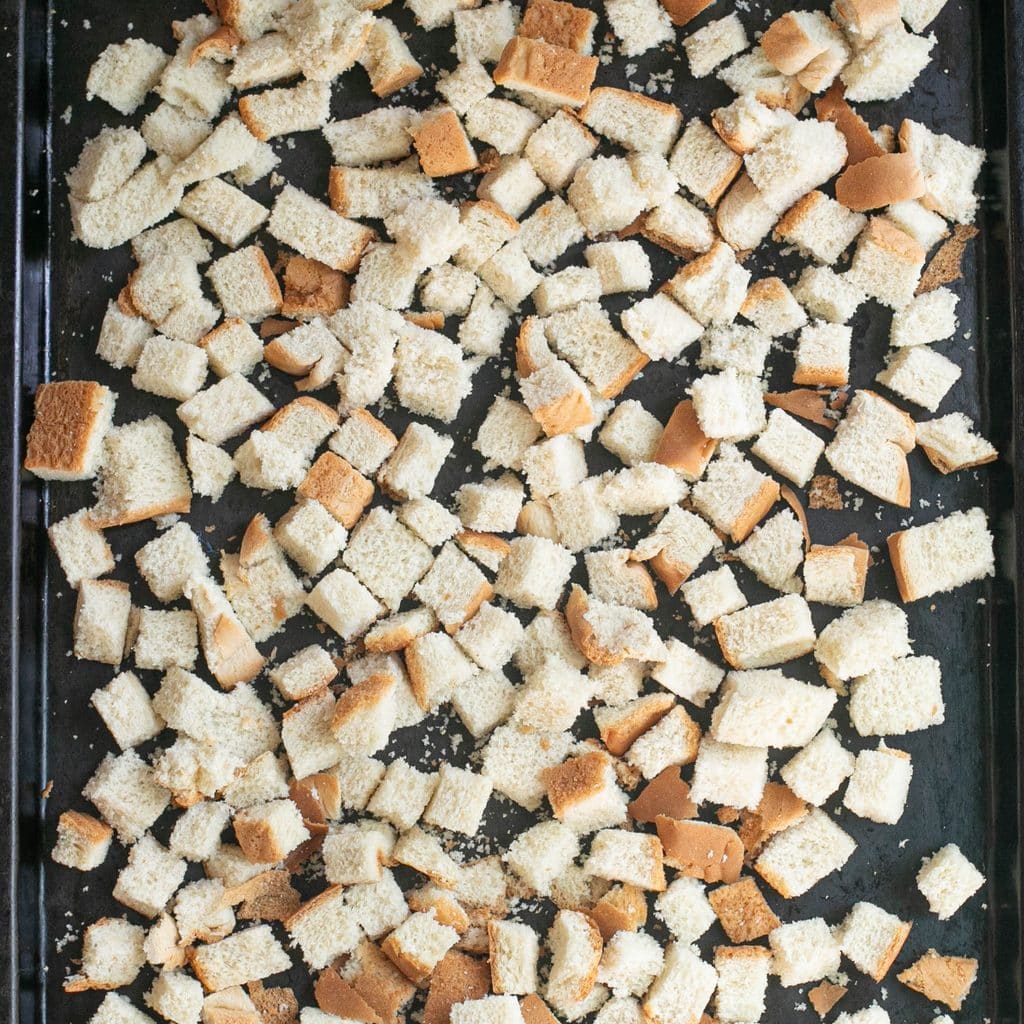
Option 1: Air-dry the bread. Cut your loaf into small pieces and spread them out on a large baking sheet. Leave them uncovered at room temperature for at least 4 hours, up to overnight.
Option 2: Dry the bread in the oven. Preheat your oven to 250F degrees. Spread the bread cubes in a single layer on a large baking sheet and bake for about 45–60 minutes, stirring occasionally. The exact time will depend on the type of bread and the size of the cubes. You want the bread to be dry throughout without becoming overly browned.
Variations
Sausage stuffing: Brown pork sausage or sweet Italian sausage in a large skillet, breaking it into small pieces as it cooks. Drain excess grease if necessary, then mix the cooked sausage into the bread mixture before baking.
Vegetarian stuffing: Use vegetable broth instead of chicken stock and make sure your bread and seasonings are vegetarian-friendly.
Apple and cranberry stuffing: Add diced apples and dried cranberries for a sweet and savory combination that pairs beautifully with roast turkey and cranberry sauce.
Stuffing muffins: Divide the mixture into a greased muffin tin and bake until the tops are golden brown and crisp. These individual portions are easy to serve and offer more crispy edges in every bite.
Serving Suggestions
This classic Thanksgiving side dish pairs beautifully with all your holiday favorites. Serve it alongside roasted or smoked turkey, roast chicken, mashed potatoes, gravy, green bean casserole, roasted Brussels sprouts, and sweet potato casserole.
Don’t forget the cranberry sauce! Its sweet-tart flavor complements the buttery, savory stuffing and adds a bright contrast to the meal.
Stuffing is also delicious outside the holiday season. Serve it with roast chicken, pork chops, or a simple weeknight dinner when you’re craving comforting, traditional flavors.
What Is the Best Bread for Stuffing?
The best bread depends on the texture and flavor you prefer.
- French bread: A great all-purpose choice with a mild flavor and sturdy texture.
- Sourdough bread: Adds a slightly tangy flavor and holds its shape well.
- White bread: Produces a soft, classic stuffing with a familiar taste. It’s what I use for my stuffing recipe.
- Wheat bread: Adds a heartier flavor and a little more texture.
You can also combine different types of bread. For example, mixing French bread with sourdough creates a delicious balance of mild and tangy flavors. Whatever kind of bread you choose, make sure it is thoroughly dried before adding the broth.
Can I Stuff a Turkey With This Recipe?
Yes, you can use this recipe to stuff a Thanksgiving turkey, but there are a few important food safety considerations.
The main difference is that stuffing baked in a casserole dish cooks separately from the turkey, while stuffing cooked inside the bird absorbs juices from the turkey as it roasts. Although many people enjoy this traditional method, it requires extra attention to ensure the stuffing reaches a safe temperature.
If you choose to stuff your turkey, follow these guidelines:
- Prepare the stuffing immediately before filling the turkey.
- Stuff the cavity loosely rather than packing the bread mixture tightly.
- Place the turkey in the oven immediately after stuffing it.
- Use a food thermometer to confirm that the center of the stuffing reaches 165F degrees.
- Check the turkey’s internal temperature separately to ensure the thickest parts of the breast and thigh also reach 165F degrees.
Why Is My Stuffing Mushy?
Mushy stuffing is usually caused by too much liquid, bread that wasn’t dried sufficiently, or not baking it for long enough.
Here are a few ways to prevent it:
1. Dry the bread thoroughly. Dry bread cubes absorb broth more effectively without breaking down as quickly. If you’re starting with fresh bread, give it enough time in the oven to dry out.
2. Add the broth gradually. Different types of bread absorb different amounts of liquid. Pour the broth in slowly and stop when the bread is moistened but not saturated. You may not need all the liquid listed in this recipe.
3. Don’t pack the stuffing too tightly. Transfer the mixture to your baking dish and spread it evenly. A little space between the pieces helps the heat circulate.
4. Bake uncovered at the end. Covering the stuffing initially helps the center cook without drying out. Removing the foil near the end allows excess moisture to evaporate and the top to become crisp.
Do I Have to Use Eggs in Stuffing?
Eggs act as a binder, helping the bread cubes hold together and giving the finished stuffing a more cohesive texture. If you prefer stuffing with distinct bread cubes and a looser texture, you can leave them out.
Without eggs, the stuffing will still taste delicious as long as the bread is properly dried and the liquid is added gradually.
What Is the Difference Between Stuffing and Dressing?
The terms stuffing and dressing are often used interchangeably, and both refer to a bread-based side dish flavored with vegetables, herbs and broth.
Traditionally, stuffing is cooked inside the cavity of a turkey or another bird, while dressing is baked separately in a casserole dish. However, regional traditions vary, and many families call their favorite baked version stuffing even when it never goes inside a turkey.
Both dishes can use the same ingredients and preparation methods. The main differences are how they’re cooked and the texture they develop.
Make Ahead and Storage Instructions
Make-Ahead Instructions
There are two good options for making this stuffing ahead of time:
Option 1: Dry the bread cubes, chop the vegetables and mince the herbs. Then, assemble the stuffing the day of, bake and enjoy.
Option 2: Assemble the entire dish and cover tightly with plastic wrap or aluminum foil. Refrigerate overnight. The day of, let the stuffing sit at room temperature for 30 minutes before baking and then proceed according to the recipe card.
Storage Instructions
Refrigerator: Store leftover stuffing in an airtight container or cover the baking dish tightly. Refrigerate within two hours of cooking and enjoy within 3–4 days.
Freezer: Transfer cooled stuffing to a freezer-safe container or freezer bag. It can be frozen for several months.
Reheating: Place the stuffing in an oven-safe dish, add a little chicken stock if it seems dry, and cover with foil. Reheat in a warm oven. Remove the foil toward the end if you want to restore the crispy top.
Tips for Success
- Dry the bread completely: This is the key to preventing soggy stuffing and achieving the right texture.
- Use plenty of butter: Butter gives the vegetables a rich flavor and helps create a deliciously savory stuffing.
- Don’t rush the vegetables: Cook the onion and celery until tender so they blend seamlessly into the finished dish.
- Season as you go: Taste the vegetable mixture before adding the broth, remembering that stock may already contain salt.
- Add liquid gradually: The amount of broth needed will depend on the type of bread you use.
- Leave room for crisp edges: Spread the mixture in an even layer rather than compressing it.
Frequently Asked Questions
You can, but the flavor and texture will be different. A packaged stuffing mix is convenient, while homemade stuffing gives you more control over the type of bread, herbs, butter, and broth. For the best flavor, start with good-quality bread and season it yourself.
Absolutely! Turkey stock is an excellent choice for Thanksgiving stuffing, especially if you have homemade stock from preparing your holiday turkey. Low-sodium chicken broth, vegetable broth or homemade stock will also work.
Dry stuffing usually needs a little more broth or a shorter baking time. Drizzle warm chicken stock over the stuffing and cover it with foil while reheating to help restore moisture. Add liquid a little at a time to avoid making it soggy.
Yes! This recipe is easy to scale for a large Thanksgiving gathering. Use a larger baking dish or divide the mixture between two dishes to ensure even cooking. If you’re doubling the recipe, check the center for doneness rather than relying only on the original baking time.
When you make this homemade stuffing recipe, I’d love to hear about it! Drop a rating or leave a comment below. Enjoy!
For more Thanksgiving side dishes, try these:
Homemade Stuffing
Ingredients
- 12 cups bread cubes dried
- 2 medium yellow onions diced
- 2 cups celery diced
- 2 cups chicken stock
- 2 large eggs
- 3/4 cup unsalted butter
- 2 Tbsp. fresh parsley minced
- 2 Tbsp. fresh sage minced
- 1 Tbsp. fresh rosemary minced
- 1 Tbsp. fresh thyme minced
- 1 tsp. salt
Instructions
- Preheat oven to 350F degrees.
- Melt the butter in a large skillet over medium-low heat. Cook the diced onions and celery until softened, about 10 minutes. Remove from heat and set aside.
- In a large mixing bowl, combine the bread cubes, broth, eggs, cooked onions and celery, fresh herbs and salt. Be sure that all bread cubes are coated and moist.
- Transfer the mixture to a 9×9 baking dish. Cover with foil.
- Bake 35 minutes, remove the foil and bake 20 more minutes. Serve warm.
This is pretty much my Mom’s recipe for decades except she boiled the giblets (neckbone, liver, heart, gizzard) with some onion & celery, chopped them finely and added that meat & broth to the stuffing as well. She would also put slices of butter on top before baking but, then again, butter was it’s own food group for her 😄.
Jane, same here. I grew up making stuffing adding lots of gizzards, raisins and cranberries. Delish!!